

I had dreamed of getting this treatment for three years. Before flying to Seoul, I compared the prices of Pico laser treatments in Taiwan, Hong Kong, and South Korea.

I don’t know if you’ve ever had this experience: after undergoing several laser treatments in Taiwan, the acne scars remained unchanged; the freckles would fade but then reappear. A lot of money was spent, but the results were always unstable. It wasn’t until a friend of mine returned from Seoul that I really began to investigate what made South Korea’s Pico laser treatments different. Her skin had completely changed.
After nearly two months of research and comparing the costs and technical differences of Pico laser treatments in Taiwan, Hong Kong, and South Korea, I finally decided to go to the Betterme Gangnam Dermatology in Seoul. In this article, I have detailed the reasons behind my choice, a comprehensive comparison of costs, my experience on the day of the treatment, and my recovery process, in order to provide information for those who are also considering this option.

What exactly is a Pico laser? Why do Taiwanese women prefer it over traditional lasers?
“Pico” means 10 to the power of minus 12 seconds, which is one millionth of a second. A Pico Laser is capable of emitting ultra-high-energy pulses in such a short amount of time, shattering melanin or scar tissue into powder that can then be naturally metabolized and eliminated by the body. In principle, this process is over 1,000 times faster than that of traditional Q-switched millisecond lasers or even nanosecond lasers.
What is the greatest advantage? The risk of thermal damage is extremely low. Traditional lasers, due to their longer treatment duration, can easily cause the skin to overheat, thereby stimulating melanocytes to produce more pigment (leading to darkening of the skin). However, Pico lasers work so quickly that heat has hardly any time to spread, making them particularly suitable for people of Asian descent with darker skin tones. This is precisely why they have become so popular in Seoul, Taipei, and Hong Kong.

The currently mainstream Pico lasers on the market include PicoSure (755nm, produced by Cynosure in the United States), PicoWay (532/730/1064nm, produced by Syneron in Israel), and Picollo (developed independently in South Korea). Different wavelengths target different issues; due to its multiple wavelengths, PicoWay is able to treat freckles, acne scars, and Pores simultaneously, making it the most commonly used configuration in South Korea at present.
Pico laser vs Q-switched laser vs Fractional laser: It was only after consulting a doctor that I understood the differences between these three types of lasers.
After consulting with doctors from Betterme, I finally managed to understand the differences between these three types of lasers. If you also find it difficult to distinguish them, this table should be helpful to you:

| Type | Principle of action | Most suitable for solving this problem | Recovery period | Risks associated with anti-black practices |
|---|---|---|---|---|
| Pico laser | Ultra-short pulse technology for breaking down pigments | Birthmarks, acne scars, and Pores | 1-3 days (mild redness) | ⭐ Extremely low |
| Flying shuttle laser | Dot matrix heating stimulates regeneration | Deep scars and enlarged Pores | 5-7 days (crusting and peeling) | ⭐⭐⭐ Relatively high |
| Pure Skin Laser (1064) | Even heating for uniform whitening | Dull skin tone and Reduction surgery of Pores | Almost none | ⭐⭐ Medium level |
If, like me, your main concerns are acne scars and skin pigmentation, Pico is the most suitable option. Although Fraxel is more effective for deep-seated scars, its recovery period is relatively long, making it unsuitable for those with travel schedules. Laser skin treatment is good for maintenance, but its effect on existing skin pigmentation is limited.
Prices of Pico lasers in South Korea in 2026: Comparing with those in Taiwan and Hong Kong, I realized the huge difference.
This was the decisive factor that ultimately led me to decide to fly to Seoul. For the same PicoWay Pico laser treatment, the price differences in these three places were astonishingly large.

| region | One-time cost for Pico treatment on the entire face | Converted into New Taiwan Dollars (approximate amount) | Recommended number of treatment sessions | Remarks |
|---|---|---|---|---|
| 🇰🇷 Seoul, South Korea | ₩150,000 – ₩350,000 | NT$3,300 – NT$7,700 | 3 to 5 times | The current situation in Gangnam District |
| 🇹🇼 Taiwan | NT$6,000 – NT$15,000 | NT$6,000 – NT$15,000 | 3 to 6 times | Market conditions in various clinics in Taipei |
| 🇭🇰 Hong Kong | HK$1,500 – HK$3,500 | NT$5,800 – NT$13,500 | 3 to 5 times | Market conditions in Causeway Bay/Tsim Sha Tsui |
Taking the most common treatment option, “one course of PicoWay Pico laser treatment for the entire face (3 sessions),” as an example, the cost in South Korea ranges from ₩450,000 to ₩91,050,000 (which is approximately NT$10,000 to NT$23,000 when converted). In Taiwan, the same 3 sessions also cost at least NT$18,000 to NT$45,000, representing a difference of nearly twice. Even if you include the costs of airfare and accommodation, the total cost in South Korea is roughly equivalent to that in Taiwan – or even more affordable. Not to mention that you can also enjoy a trip to Seoul during this process.
Why did I choose Betterme Gangnam Dermatology for my Pico treatment? Before making my decision, I asked myself these questions.
Before deciding to go to Betterme, I researched several Dermatology clinics in Gangnam that offered PicoWay treatment, and ultimately chose this one for several reasons.
Firstly, the facility is well-equipped. The Gangnam branch of Betterme is equipped with the PicoWay multi-wavelength device, as well as Thermage FLX, HIFU, INMODE, and other devices. You don’t have to worry about doctors recommending unnecessary treatments just to meet their performance targets. Secondly, they offer reservation services in Traditional Chinese through the BeautsGO platform, ensuring clear and hassle-free communication. Thirdly, the clinic is located near Gangnam Station, making transportation convenient – you can even go shopping immediately after your treatment.

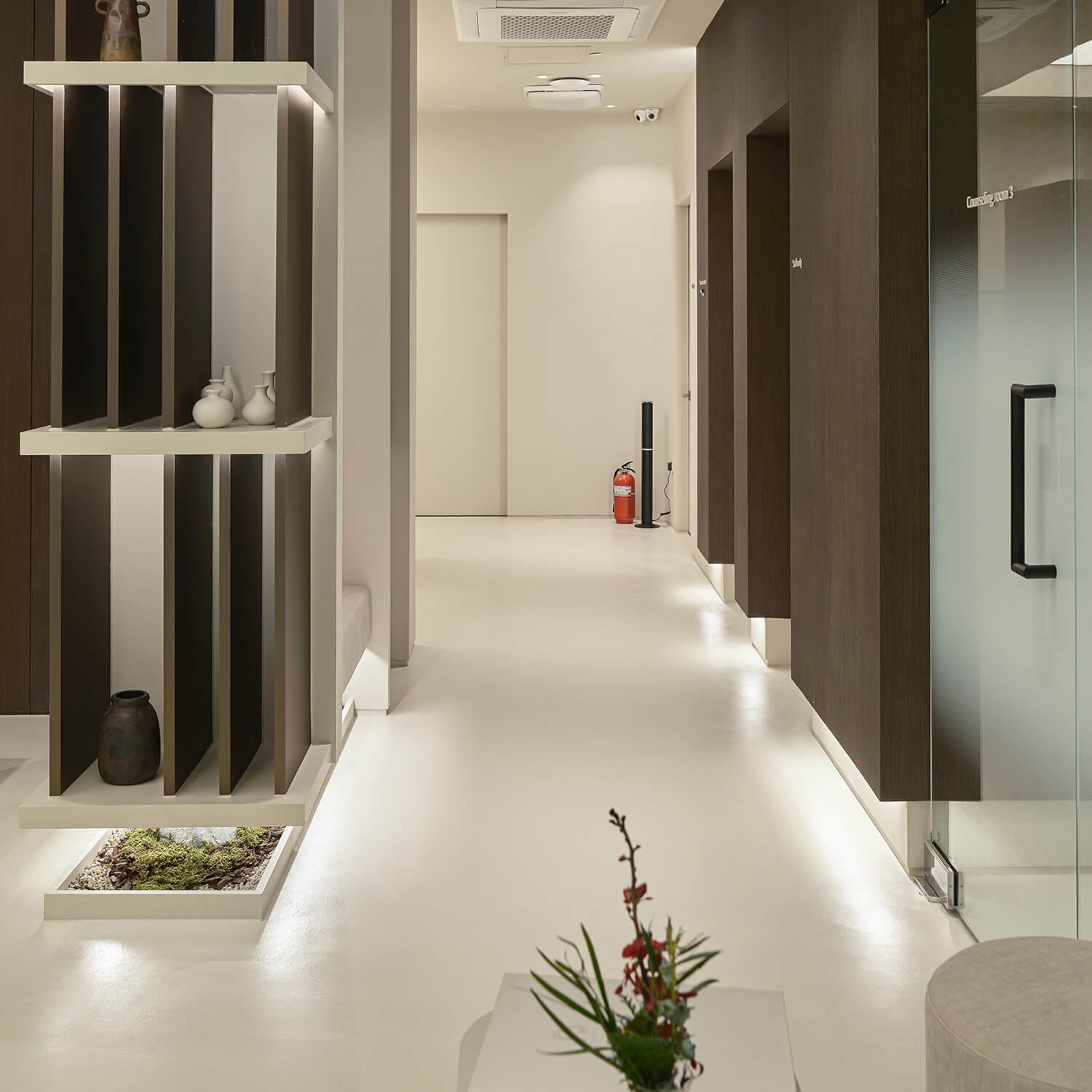
On the day of the consultation, the doctor first used instruments to analyze the distribution of pigments on my face and confirmed that my main issues were sunspots and superficial acne scars. He concluded that the combination of 532nm and 1064nm wavelengths offered by PicoWay would be the most effective treatment. The entire consultation took approximately 20 minutes, and I didn’t feel at all like I was being pressured to make a purchase; everything the doctor mentioned was exactly what I needed.
Complete record of the Pico laser treatment on that day: from entering the clinic to the completion of the treatment, it took less than 1 hour.
The appointment was scheduled for 10 a.m. on that day, and I arrived at the clinic on time. The receptionist confirmed my appointment details in Chinese. The waiting area was very comfortable, equipped with drinks and magazines. After the initial consultation, I went to a small room where I received pre-anesthetic preparations and applied the anesthetic ointment; I had to wait for about 30 minutes.
The actual treatment with the laser began around 20 minutes later. The sensation during the PicoWay treatment was a series of mild stings, much more gentle than the Fraxel treatment; it was similar to the feeling of a rubber band snapping lightly against the skin. After the entire face was treated, the therapist applied a soothing red light therapy and then a reparative mask.

I looked in the mirror right after the treatment. My face was red, as if I had gotten a mild sunburn, but there was no swelling. The hospital instructed me not to wash my face with hot water, not to wear makeup, and to increase my use of sunscreen for at least two weeks. That afternoon, I went for a walk around Hongdae. With a mask on, it was completely impossible to tell that I had just undergone the treatment; by the next day, the redness had almost gone away.
Recovery period and results of Pico laser treatment: After 3 sessions, my skin really changed.
About 1 week after the first treatment, my complexion already looked much brighter, and some of the spots began to form very thin scabs. Once these scabs gently fell off, the affected areas of skin became lighter in color. This reaction was completely within expectations. South Korean doctors stated that 3 sessions of Pico laser treatment constitute a full course of treatment, with each session spaced 4 to 6 weeks apart.
Evaluation 3 months after the third treatment: The sunspots have faded by more than 60%; the deepest acne scars still require further treatment, but the superficial ones have almost completely disappeared. I had Q-switch laser treatments in Taiwan at a similar cost, but never achieved such results so quickly. My friends said that my skin looks much better, especially in terms of its evenness – this is the most direct confirmation of the effectiveness of these treatments.
How do foreigners schedule a Pico laser treatment in Seoul? I completed the whole process in just three steps using BeautsGO.
Language barriers have always been the biggest obstacle for Taiwanese women going to Seoul for cosmetic procedures. I booked my appointment with Betterme Gangnam through the BeautsGO platform, and the entire process was very smooth: search for “Betterme Gangnam”, select the treatment and date, fill in the notes in Traditional Chinese (to describe your skin issues), and you will receive a confirmation within 24 hours. On the day of the procedure, the clinic has staff who understand Chinese, so you don’t have to worry about misunderstandings during the consultation.
📅 立即預約 BeautsGO
Free consultation · Traditional Chinese language service · Quick reservation
Frequently Asked Questions
Q: How many sessions of Pico laser treatment are required to see significant results?
A: It is generally recommended to undergo 3 to 5 treatments per course, with each treatment spaced 4 to 6 weeks apart. Freckles usually show significant lightening after 1 to 2 treatments; acne scars require 3 to 5 treatments, while deeper indentations may need to be treated in combination with other procedures such as fractional laser therapy.
Q: What should be noted during the recovery period after Pico laser treatment?
A: On the day of the procedure and the day after, avoid washing your face with hot water. For 7 days following the treatment, do not use exfoliating or irritating skincare products. Also, apply sunscreen for at least two weeks (SPF50+ is recommended; physical sun protection is even better). Generally, the redness will subside within 1-2 days. If mild scabbing occurs, do not try to remove it forcibly.
Q: Is it safe to take a flight back to Taiwan the day after undergoing Pico laser treatment in South Korea?
A: The recovery period after Pico laser treatment is relatively short; generally, one can resume normal activities the day after the procedure. When taking a long-distance flight, it is important to pay attention to the dryness in the cabin. It is recommended to drink plenty of water, maintain proper hydration, and take physical sun protection measures such as wearing a hat or mask. Most people do not experience any problems during flights after this treatment.
Q: Is Pico laser suitable for sensitive skin?
A: The thermal damage caused by Pico lasers is lower than that of traditional lasers, making them relatively more suitable for Asian skin types and sensitive skin. However, it is still necessary for a doctor to assess the skin condition and adjust the energy parameters accordingly. It is recommended to provide accurate information about your skin type during the consultation, so that the doctor can determine whether this treatment is suitable for you.
Q: How soon after a Pico laser treatment can I wear makeup?
A: It is generally recommended to avoid wearing makeup within 24 to 48 hours after the procedure. If there are slight scabs, wait until they fall off naturally (usually within 3 to 5 days) before applying makeup again, so as not to interfere with the healing process.


