Ultimate Guide to Certified Dermatology Specialists in South Korea|Only 2% of Doctors in the Country Hold This Qualification – Key Tips Avoided by Dcard Users

Planning to fly to Seoul for cosmetic treatments? Have you also noticed the numerous “Dermatology” signs everywhere, but struggled to tell which ones are truly reliable? Recently, the term “Red-Label Dermatologists in South Korea” has become extremely popular on Dcard—so what exactly is a red label? And why do only 2% of doctors in the entire country qualify for it? This quick guide puts together all the information I’ve gathered, along with the most frequently asked questions about avoiding scams, to help you make the right decision before booking.
What exactly is the “red label” in South Korea’s Dermatology field? After doing some research, I found that only 2% of doctors in the entire country qualify for it.
The so-called “red mark” refers to the certification symbol for Dermatology specialists in South Korea, issued by the Korean Association of Dermatologists (AKD, 대한피부과의사회). It’s that red “Dermatology Specialist” badge you see at the entrance of a clinic, on its official website, or on the doctor’s name tag.
Here’s the key point: According to data from South Korea’s National Statistical Office (KOSIS) in 2022, out of roughly 110,000 practicing doctors nationwide, there are only about 2,497 dermatology specialists, accounting for around 2% of the total. In other words, if you walk into any “Dermatology” clinic on the streets of Seoul at random, the chances that its director holds a certification in dermatology are actually quite low.
Why is this so rare? It takes at least 11 years to become a board-certified dermatologist: 6 years of medical education → 1 year of general practice internship → entry into Dermatology after passing the residency exam → 4 years of specialized clinical training → passing national board exams. This comprehensive training covers skin pathology, laser parameters, injection techniques, and complication management—skills that owners of ordinary “beauty clinics” may not necessarily possess.
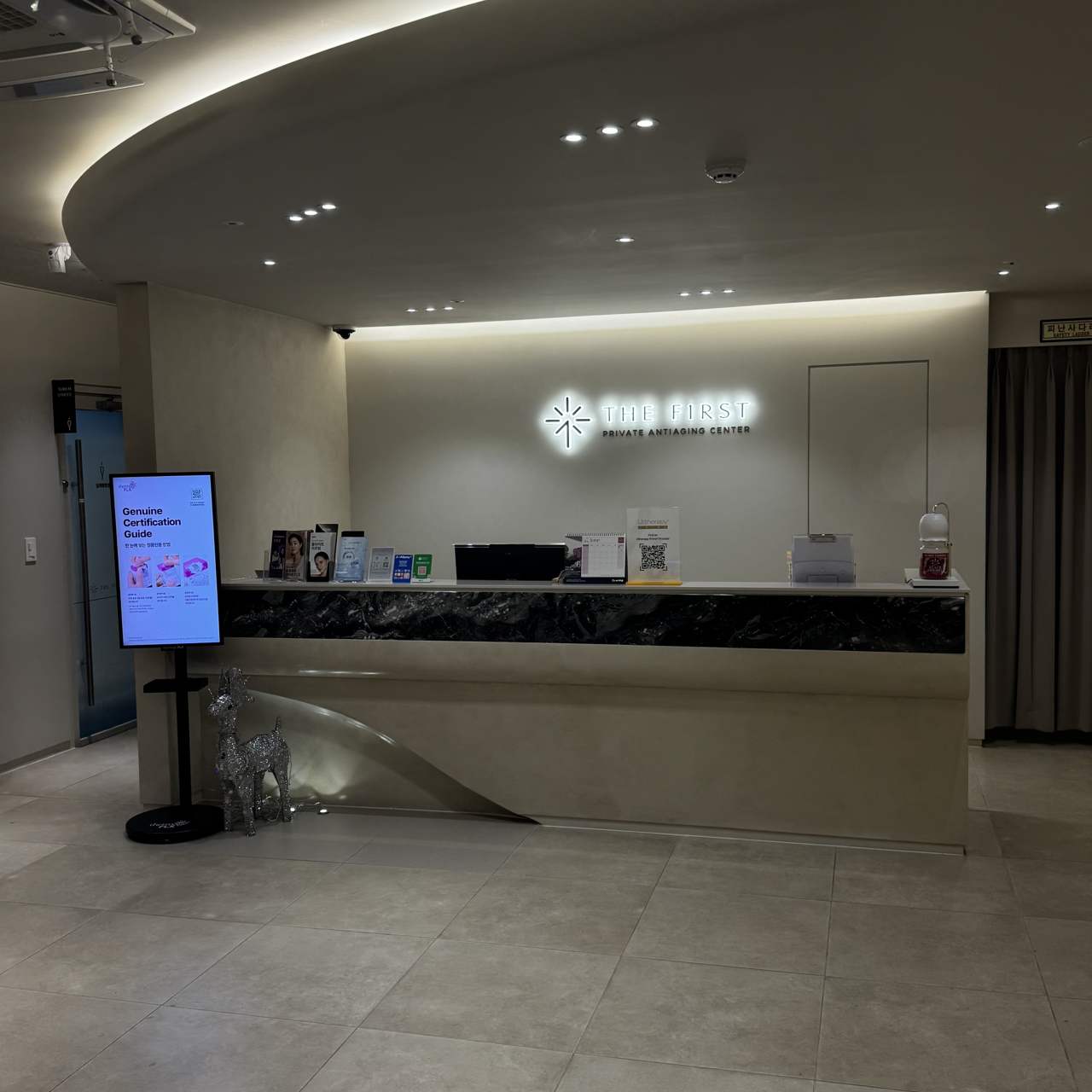
Red Mark vs Non-Red Mark: 3 Key Differences That Determine Whether Your Face Is Safe
Many netizens wonder about the difference between “regular dermatology clinics” and “specialized Dermatology practices.” I’ve summarized the key points in a table—it’s not a matter of price difference, but rather a difference in risk.
| Comparison Dimensions | General Dermatology Clinic | Red Mark Specialist Dermatology |
|---|---|---|
| Background Development | May come from internal medicine, surgery, or other specialties, lacking systematic dermatological training | Over 4 years of clinical training in dermatology + national specialist medical examination |
| Qualification badge | The red AKD logo is prohibited from use by law. | Legally display the red AKD certification logo, with a red mark on the doctor’s coat belt |
| Technical Depth | Expert in basic skincare, simple laser treatments, and injections | Treatment of complex skin conditions, advanced laser therapies, customized anti-aging solutions |
| Side effect risks | Performed by non-specialists, with a 1.4–4 times higher risk of serious complications | Expert in complication control and long-term management |
| Price transparency | Package-oriented, prone to hidden costs | Provide pre-procedure pricing and informed consent in accordance with the law |
I asked the doctor for you all 5 of the most frequently asked questions from Dcard users regarding things to avoid
Q1: Can’t you get cosmetic procedures without a red mark?
It’s not that it can’t be done, but the risks have to be borne by the patient. Basic skincare and gentle skin rejuvenation procedures can generally be carried out at regular clinics; however, when it comes to laser parameters, the depth of filler injections, or anti-aging devices, board-certified doctors have a significantly stronger understanding of anatomy and potential complications. My advice: the more advanced the procedure, the more important it is to seek out board-certified experts.
Q2: Are clinics with a red label definitely more expensive?
Not necessarily. The red mark simply indicates “certified qualifications,” not necessarily high prices. Many clinics with this red mark follow a policy of offering prices comparable to those in South Korea and China, with transparent pricing. Whether the cost is high or not depends on the specific treatment and the model of equipment used. Don’t equate having the red mark with being overcharged.
Q3: How to tell the difference between genuine and fake red labels?
Check these three things: ① Is there a physical red sign saying “Dermatologist” at the entrance? ② Does the official website list the director’s alma mater and specialized training? ③ Can you find information about the director by entering their name on the AKD official website (akd.or.kr)? If any of these don’t match, be cautious.
Q4: Are foreigners taken to non-red-flag clinics?
It’s possible, especially through opaque third-party booking services. It’s recommended to use platforms that clearly list the qualifications of the doctors in charge and offer services in Chinese. Before making a reservation, make sure to confirm whether the doctor at that clinic is a certified specialist—don’t leave the decision entirely to intermediaries.
Q5: Are the “TOP10 ranked with red marks” online trustworthy?
South Korea doesn’t have any official red-flag rankings. Any “rankings” are merely references compiled by media or platforms based on scores and evaluations, and they aren’t officially recognized. Instead of focusing on rankings, it’s better to check AKD yourself to confirm whether a clinic is a licensed medical facility.
How can you find out in just 5 minutes whether a Dermatology clinic in Seoul has the red mark certification?
You don’t need Korean to do this—just follow these three steps:
- Check the sign at the entrance: Before entering the clinic, look for a square or circular red sign that reads “Dermatology Specialist” at the entry. If there’s no such sign, no matter how nice the interior design is, it’s worth questioning first.
- Check the website for credentials: Reputable clinics with a red logo will definitely indicate that the director is a “dermatology specialist,” along with their alma mater and specialized training background. Be cautious if it only says “director” without mentioning they are a specialist doctor.
- Verification on AKD’s official website: Log in to the website of the Korean Dermatology Association (akd.or.kr), enter the name of the hospital director or the name of the hospital, and if it shows up as “True Red Mark,” that’s the most reliable way to confirm authenticity.
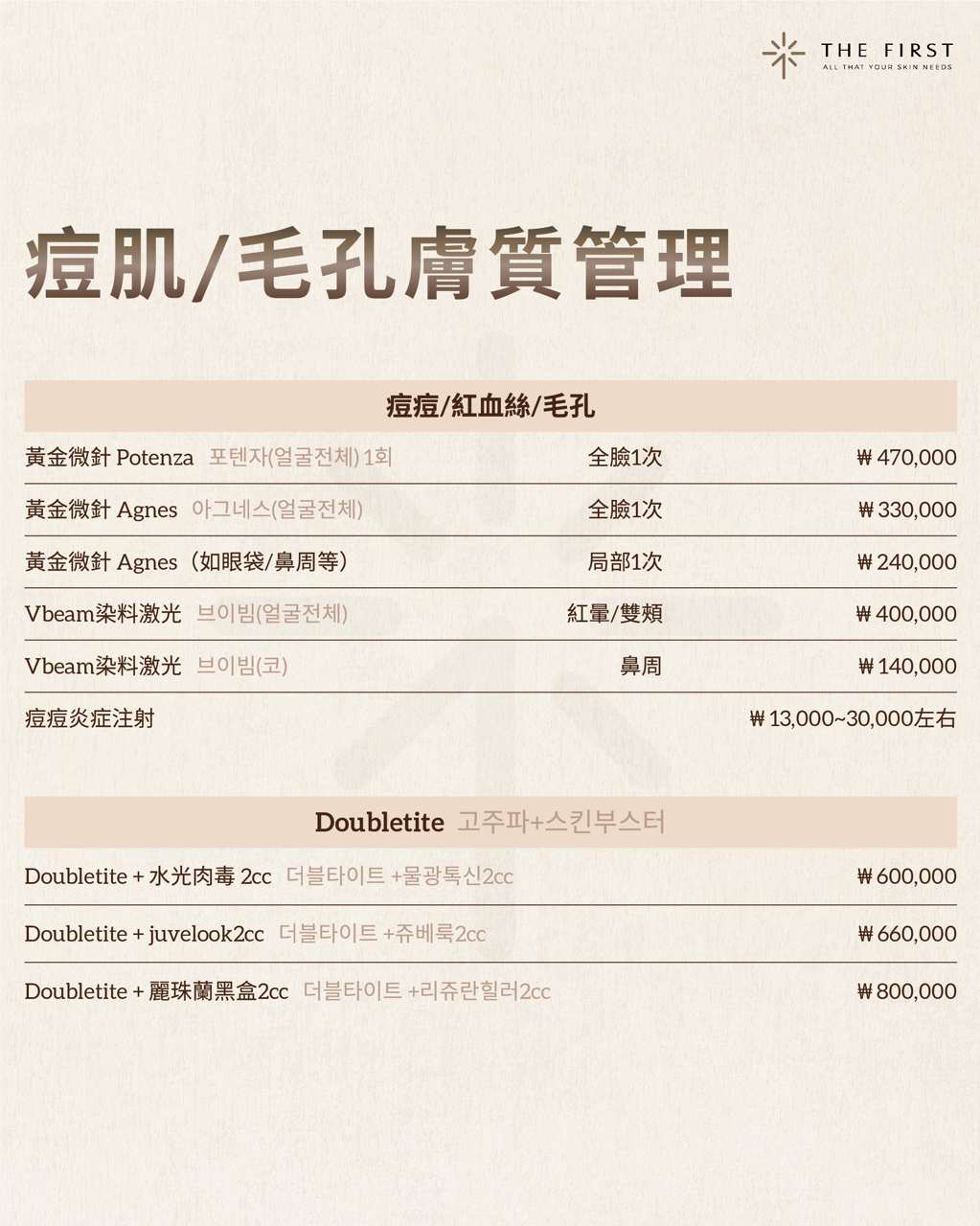
South Korea Dermatology Price Guide: Are Clinics Marked Red Really More Expensive?
Just compare the numbers. The table below shows the reference ranges for common procedures (in Korean won ₩; Taiwanese dollars NT$ are estimated at approximately ₩1≈NT$0.024, with the actual rate subject to the clinic’s current rate). What matters is the difference between the “red-marked” prices and those in Taiwan and Hong Kong, rather than whether the red-marked prices are inherently high.
| Project (Reference) | Top-rated medical clinics in South Korea (estimated) | Taiwan / Hong Kong (estimated) | How much less |
|---|---|---|---|
| Thermage FLX 300 launched | ₩2,000,000–2,500,000 (appro ximately NT$48,000–60,000) |
NT$70,000–90,000 / HK$20,000+ | Save 30–40% |
| 100 Shots of HIFU | ₩900,000–1,200,000 (appr oximately NT$21,600–28,800) |
NT$40,000–60,000 | Save half |
| Rejuran | Starting from ₩250 ,000 (about NT$6,000) |
NT$9,000–12,000 | 30–50% cheaper |
| Pico Laser Treatment (Full Face) | ₩150,000–300,000 (appr oximately NT$3,600–7,200) |
NT$6,000–12,000 | You can save almost 40% at the provincial level. |
For those considering cosmetic surgery in Seoul: My 3 honest tips
Condense the information above into three actions you can take today:
- ① First, check for the red mark, then compare prices. Use “Is it provided by a dermatology specialist?” as your first filtering criterion; only after that should you discuss prices and services—never reverse the order.
- ② Use platforms to verify qualifications and ensure Chinese-language services. Sites like BeautsGO, which display the specialist qualifications of their clinic directors and offer booking in Chinese, can help you avoid the pitfalls caused by language barriers and information asymmetry.
- ③ When making an appointment, simply ask, “Is the director a board-certified specialist in Dermatology?” Reputable doctors with official certifications will happily confirm it; if they hesitate or avoid answering, choose another clinic.
Regarding the red-marked qualification, you might also want to know
Are the red badge and “Specialist Doctor” the same thing?
Yes. The red mark is an informal term for “Dermatology specialist (피부과 전문의)”, referring to doctors who have completed specialized dermatology training and passed national exams. These two terms denote the same certification.
Can plastic surgeons perform skin treatments?
Sure, but they deal with different areas. Plastic surgery specializes in surgeries and facial contouring, while Dermatology focuses on skin conditions, lasers, and injectable treatments. For procedures like laser therapy, hyaluronic acid injections, and Pico treatments, turning to a Dermatology specialist is the better choice.
What to do if you encounter disputes or suspect fake red labels?
Keep all the receipts and pre-operative consent forms, and first consult with the medical association affiliated to the clinic; in serious cases, you can file a complaint through the South Korea Medical Dispute Resolution Committee. It’s better to check AKD before traveling than to seek remedies afterward.
Related Recommendations: More Practical Guides to Dermatology in South Korea
- 🔗 How to Book an Appointment at Elvia Dermatology in South Korea|No Korean Skills Needed! BeautsGO offers a user-friendly Chinese interface that lets you instantly check the schedules of specially designated doctors. If you want to see how to book appointments with “top-rated doctors via Chinese”, this guide will show you exactly how it works.
- 🔗 Busan The First Dermatology Prices on Dcard|Thermage FLX is 40% cheaper than those in Gangnam; HIFU costs just 9,000 New Taiwan Dollars per session—verified with real cases from top-rated hospitals, offering transparent pricing and actual costs handled by expert doctors.
- 🔗 Latest Price List for ANEW JD Clinic in Gangnam 2026 | HIFU at 300,000 won per session, Thermage FLX at 2.29 million won per session, Rejuran starting from 250,000 won per session — all treatments performed personally by Dr. Du Jin-woo from Seoul National University. Complete pricing for this top-rated clinic in Gangnam, perfect for comparing prices before making a decision.